






Weekly Facebook 2011-10-10 (Thu Oct 13 00:44:44 2011)
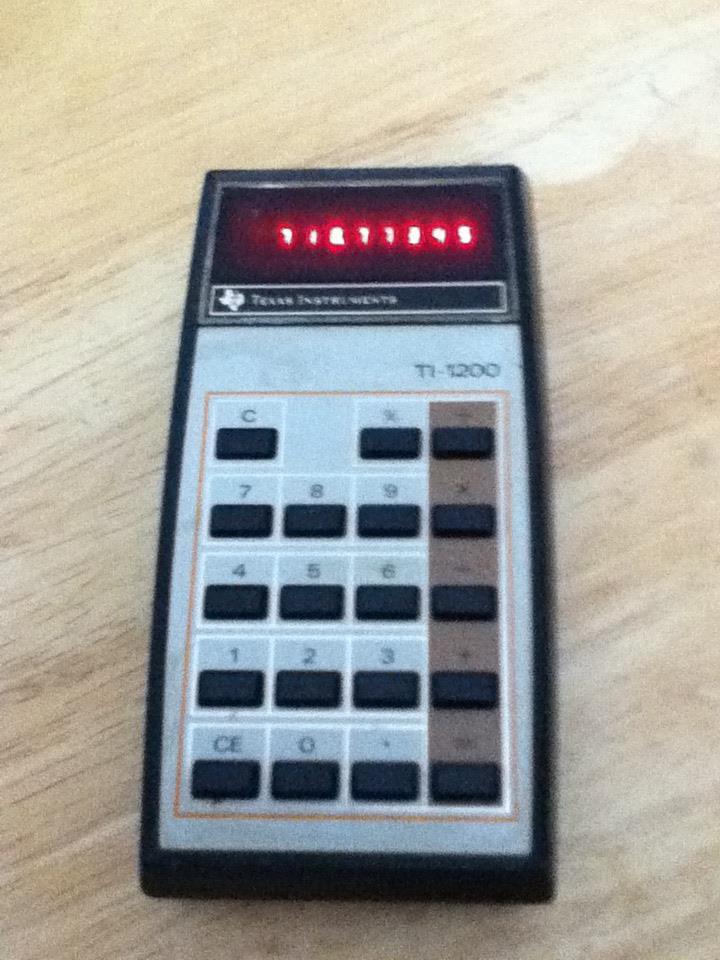
This was the second prize in the bicentennial math problem - sitting here in 2011 still working
Fri Oct 14 13:48:52 2011
Weekly Facebook 2011-10-10
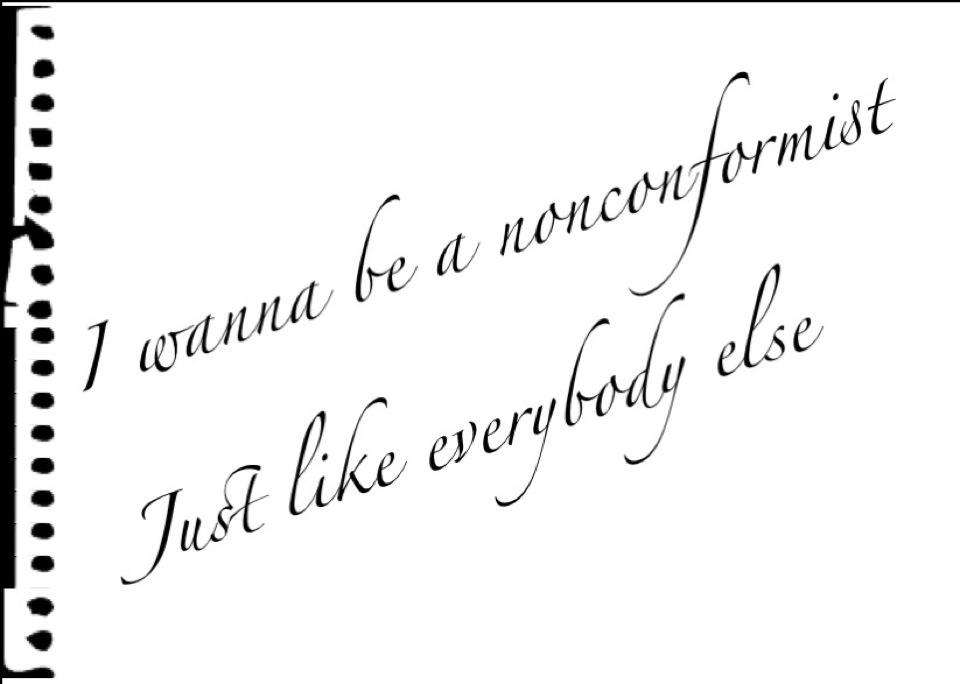
Thought for the day, not mine originally, but this expression of it is.
1318621732
Fri Oct 14 16:03:55 2011
Weekly Facebook 2011-10-10
I sure wanna go

1318629835
Sat Oct 15 10:00:31 2011
Weekly Facebook 2011-10-10
“Sometimes I can’t remember, sometimes I can’t forget.”
1318694431
Thu Oct 13 16:19:13 2011
Weekly Facebook 2011-10-10
First day on iOS 5… I like a few things a lot so far. My favorite so far is that the new good reader will continue to play mp3’s while I do other things
1318544353
Thu Oct 13 12:32:56 2011
Weekly Facebook 2011-10-10
iPad Facebook people: have you had a picture stay stuck on the screen after viewing it? I only got rid of it by closing and reopening the app.
1318530776
Wed Oct 12 22:43:47 2011
Weekly Facebook 2011-10-10
This is beginning to feel like an old school upgrade night… you gotta do backups before you get to to the install. you start the backup, step away to let it run, come back and find that it stopped 5 minutes after you left, restart it.. by the time you get to ACTUALLY DO THE WORK you came to do, you’re tired and that’s when you start making mistakes.. lets hope i avoid that part. Waiting for apps to get backed up……
1318481027
Wed Oct 12 21:58:56 2011
Weekly Facebook 2011-10-10
i have downloaded iOS 5 but am on a different computer, so have to save ALL of my apps… should have done this while the download was happening… sigh
1318478336
Wed Oct 12 13:01:57 2011
Weekly Facebook 2011-10-10
Oh, right, I so totally needed a divider with the letter between my friends whose names start with different letters in the Facebook chat window on my iPad. WTF?
1318446117
Wed Oct 12 10:10:39 2011
Weekly Facebook 2011-10-10
Dear Facebook
You made such a big deal about the new timeline features and whatnot. I even signed up to have it sooner than my friends. I kinda liked it, a bit. So now that I have put things into place that require me to use it (like reviewing my timeline posts before they are seen there), why are you putting me into the old interface where I can’t get to those things from my iPad under safari?
At least make it my choice which interface I see, mkay?
Oh, and good on ya for getting iPad integration before the google plus. Don’t know quite is up with those guys sometimes
1318435839
Wed Oct 12 09:36:08 2011
Weekly Facebook 2011-10-10
Dear Facebook iPad app:
If I answer “don’t allow” to an external website to access my basic information, asking every time I click a link on that site isn’t going to change my answer. Please stop asking.
1318433768
Sat Oct 15 22:06:31 2011
Weekly Facebook 2011-10-10
#G+ All this stuff about people who affected the computer world gave me an idea.Richard Stallman is the Aleister Crowley of computing. Discuss. http://bit.ly/eA8V8J
1318737991
Sat Oct 15 21:20:45 2011
Weekly Facebook 2011-10-10
#G+ Dizzying but invisible depthYou just went to the Google home page.Simple, isn’t it?What just actually happened?Well, when you know a bit of about how browsers work, it’s not quite that simple. You’ve just put into play HTTP, HTML, CSS, ECMAscript, and more. Those are actually such incredibly complex technologies that they’ll make any engineer dizzy if they think about them too much, and such that no single company can deal with that entire complexity.Let’s simplify.You just connected your computer to www.google.com.Simple, isn’t it?What just actually happened?Well, when you know a bit about how networks work, it’s not quite that simple. You’ve just put into play DNS, TCP, UDP, IP, Wifi, Ethernet, DOCSIS, OC, SONET, and more. Those are actually such incredibly complex technologies that they’ll make any engineer dizzy if they think about them too much, and such that no single company can deal with that entire complexity.Let’s simplify.You just typed www.google.com in the location bar of your browser.Simple, isn’t it?What just actually happened?Well, when you know a bit about how operating systems work, it’s not quite that simple. You’ve just put into play a kernel, a USB host stack, an input dispatcher, an event handler, a font hinter, a sub-pixel rasterizer, a windowing system, a graphics driver, and more, all of those written in high-level languages that get processed by compilers, linkers, optimizers, interpreters, and more. Those are actually such incredibly complex technologies that they’ll make any engineer dizzy if they think about them too much, and such that no single company can deal with that entire complexity.Let’s simplify.You just pressed a key on your keyboard.Simple, isn’t it?What just actually happened?Well, when you know about bit about how input peripherals work, it’s not quite that simple. You’ve just put into play a power regulator, a debouncer, an input multiplexer, a USB device stack, a USB hub stack, all of that implemented in a single chip. That chip is built around thinly sliced wafers of highly purified single-crystal silicon, doped with minute quantities of other atoms that are blasted into the crystal structure, interconnected with multiple layers of aluminum or copper, that are deposited according to patterns of high-energy ultraviolet light that are focused to a precision of a fraction of a micron, connected to the outside world via thin gold wires, all inside a packaging made of a dimensionally and thermally stable resin. The doping patterns and the interconnects implement transistors, which are grouped together to create logic gates. In some parts of the chip, logic gates are combined to create arithmetic and bitwise functions, which are combined to create an ALU. In another part of the chip, logic gates are combined into bistable loops, which are lined up into rows, which are combined with selectors to create a register bank. In another part of the chip, logic gates are combined into bus controllers and instruction decoders and microcode to create an execution scheduler. In another part of the chip, they’re combined into address and data multiplexers and timing circuitry to create a memory controller. There’s even more. Those are actually such incredibly complex technologies that they’ll make any engineer dizzy if they think about them too much, and such that no single company can deal with that entire complexity.Can we simplify further?In fact, very scarily, no, we can’t. We can barely comprehend the complexity of a single chip in a computer keyboard, and yet there’s no simpler level. The next step takes us to the software that is used to design the chip’s logic, and that software itself has a level of complexity that requires to go back to the top of the loop.Today’s computers are so complex that they can only be designed and manufactured with slightly less complex computers. In turn the computers used for the design and manufacture are so complex that they themselves can only be designed and manufactured with slightly less complex computers. You’d have to go through many such loops to get back to a level that could possibly be re-built from scratch.Once you start to understand how out modern devices work and how they’re created, it’s impossible to not be dizzy about the depth of everything that’s involved, and to not be in awe about the fact that they work at all, when Murphy’s law says that they simply shouldn’t possibly work.For non-technologists, this is all a black box. That is a great success of technology: all those layers of complexity are entirely hidden and people can use them without even knowing that they exist at all. That is the reason why many people can find computers so frustrating to use: there are so many things that can possibly go wrong that some of the inevitably will, but the complexity goes so deep that it’s impossible for most users to be able to do anything about any error.That is also why it’s so hard for non-technologists to communicate: technologists know too much about too many layers and non-technologists know too little about too few layers to be able to establish effective direct communication. The gap is so large that it’s not even possible any more to have a single person be an intermediate between those two groups, and that’s why e.g. we end up with those convoluted technical support call centers and their multiple tiers. Without such deep support structures, you end up with the frustrating situation that we see when end users have access to a bug database that is directly used by engineers: neither the end users nor the engineers get the information that they need to accomplish their goals.That is why the mainstream press and the general population has talked so much about Steve Jobs’ death and comparatively so little about Dennis Ritchie’s: Steve’s influence was at a layer that most people could see, while Dennis’ was much deeper. On the one hand, I can imagine where the computing world would be without the work that Jobs did and the people he inspired: probably a bit less shiny, a bit more beige, a bit more square. Deep inside, though, our devices would still work the same way and do the same things. On the other hand, I literally can’t imagine where the computing world would be without the work that Ritchie did and the people he inspired. By the mid 80s, Ritchie’s influence had taken over, and even back then very little remained of the pre-Ritchie world.Finally, last but not least, that is why our patent system is broken: technology has done such an amazing job at hiding its complexity that they people regulating and running the patent system are barely even aware of the complexity of what they’re regulating and running. That’s the ultimate bikeshedding: just like the proverbial discussions in the town hall about a nuclear power plant end up being about the paint color for the plant’s bike shed, the patent discussions about modern computing systems end up being about screen sizes and icon ordering, because in both cases those are the only aspect that the people involved in the discussion are capable of discussing, even though they are irrelevant to the actual function of the overall system being discussed. http://bit.ly/eA8V8J
1318735245
Sat Oct 15 21:20:42 2011
Weekly Facebook 2011-10-10
#G+ I was warmly surprised to see how many people responded to my Google+ post about Dennis Ritchie’s untimely passing. His influence on the technical community was vast, and it’s gratifying to see it recognized. When Steve Jobs died there was a wide lament - and well-deserved it was - but it’s worth noting that the resurgence of Apple depended a great deal on Dennis’s work with C and Unix.The C programming language is quite old now, but still active and still very much in use. The Unix and Linux (and Mac OS X and I think even Windows) kernels are all C programs. The web browsers and major web servers are all in C or C++, and almost all of the rest of the Internet ecosystem is in C or a C-derived language (C++, Java), or a language whose implementation is in C or a C-derived language (Python, Ruby, etc.). C is also a common implementation language for network firmware. And on and on.And that’s just C.Dennis was also half of the team that created Unix (the other half being Ken Thompson), which in some form or other (I include Linux) runs all the machines at Google’s data centers and probably at most other server farms. Most web servers run above Unix kernels; most non-Microsoft web browsers run above Unix kernels in some form, even in many phones.And speaking of phones, the software that runs the phone network is largely written in C.But wait, there’s more.In the late 1970s, Dennis joined with Steve Johnson to port Unix to the Interdata. From this remove it’s hard to see how radical the idea of a portable operating system was; back then OSes were mostly written in assembly language and were tightly coupled, both technically and by marketing, to specific computer brands. Unix, in the unusual (although not unique) position of being written in a “high-level language”, could be made to run on a machine other than the PDP-11. Dennis and Steve seized the opportunity, and by the early 1980s, Unix had been ported by the not-yet-so-called open source community to essentially every mini-computer out there. That meant that if I wrote my program in C, it could run on almost every mini-computer out there. All of a sudden, the coupling between hardware and operating system was broken. Unix was the great equalizer, the driving force of the Nerd Spring that liberated programming from the grip of hardware manufacturers.The hardware didn’t matter any more, since it all ran Unix. And since it didn’t matter, hardware fought with other hardware for dominance; the software was a given. Windows obviously played a role in the rise of the x86, but the Unix folks just capitalized on that. Cheap hardware meant cheap Unix installations; we all won. All that network development that started in the mid-80s happened on Unix, because that was the environment where the stuff that really mattered was done. If Unix hadn’t been ported to the Interdata, the Internet, if it even existed, would be a very different place today.I read in an obituary of Steve Jobs that Tim Berners-Lee did the first WWW development on a NeXT box, created by Jobs’s company at the time. Well, you know what operating system ran on NeXTs, and what language.Even in his modest way, I believe Dennis was very proud of his legacy. And rightfully so: few achieve a fraction as much.So long, Dennis, and thanks for all the magic. http://bit.ly/eA8V8J
1318735242
Sat Oct 15 14:06:06 2011
Weekly Facebook 2011-10-10
1318709166
Fri Oct 14 11:50:08 2011
Weekly Facebook 2011-10-10
#G+ For +Rob Malda and anyone else who appreciates design constraints in just about anything. http://bit.ly/eA8V8J
1318614608
Fri Oct 14 11:35:25 2011
Weekly Facebook 2011-10-10
#G+ great idea except it doesnt work. can anyone say why?“Dorm Poster” http://bit.ly/oFNQIw shared from http://bit.ly/xkcdhd http://bit.ly/eA8V8J
1318613725
Thu Oct 13 22:21:04 2011
Weekly Facebook 2011-10-10
#G+ “Online Communities 2” http://bit.ly/pR3f5W shared from http://bit.ly/xkcdhd http://bit.ly/eA8V8J
1318566064
Wed Oct 12 10:06:17 2011
Weekly Facebook 2011-10-10
#G+ Dear google plus: iOS now has a quite functional iPad app. When will you have one?Love, Potential fb expatriate http://bit.ly/eA8V8J
1318435577
Mon Oct 10 09:06:33 2011
Weekly Facebook 2011-10-10
#G+ At a local gas station… http://bit.ly/eA8V8J
1318259193
Tue Oct 11 21:22:45 2011
Weekly Facebook 2011-10-10
http://www.deanjackson.dj/nameanagram/index.php?n=Robert+Charles+Anzlovar+
1318389765
Thu Oct 13 01:36:58 2011
Weekly Facebook 2011-10-10
http://www.youtube.com/watch?NR=1&v=khz78DdSGrM king crimson starless
1318491418
Fri Oct 14 17:21:15 2011
Weekly Facebook 2011-10-10
a tool for making ASCII art http://www.asciiflow.com/
1318634475
© 2026 rcanzlovar.com | About | Contact | Privacy Policy |